Keneni's Silence
The Fracture of Oromummaa

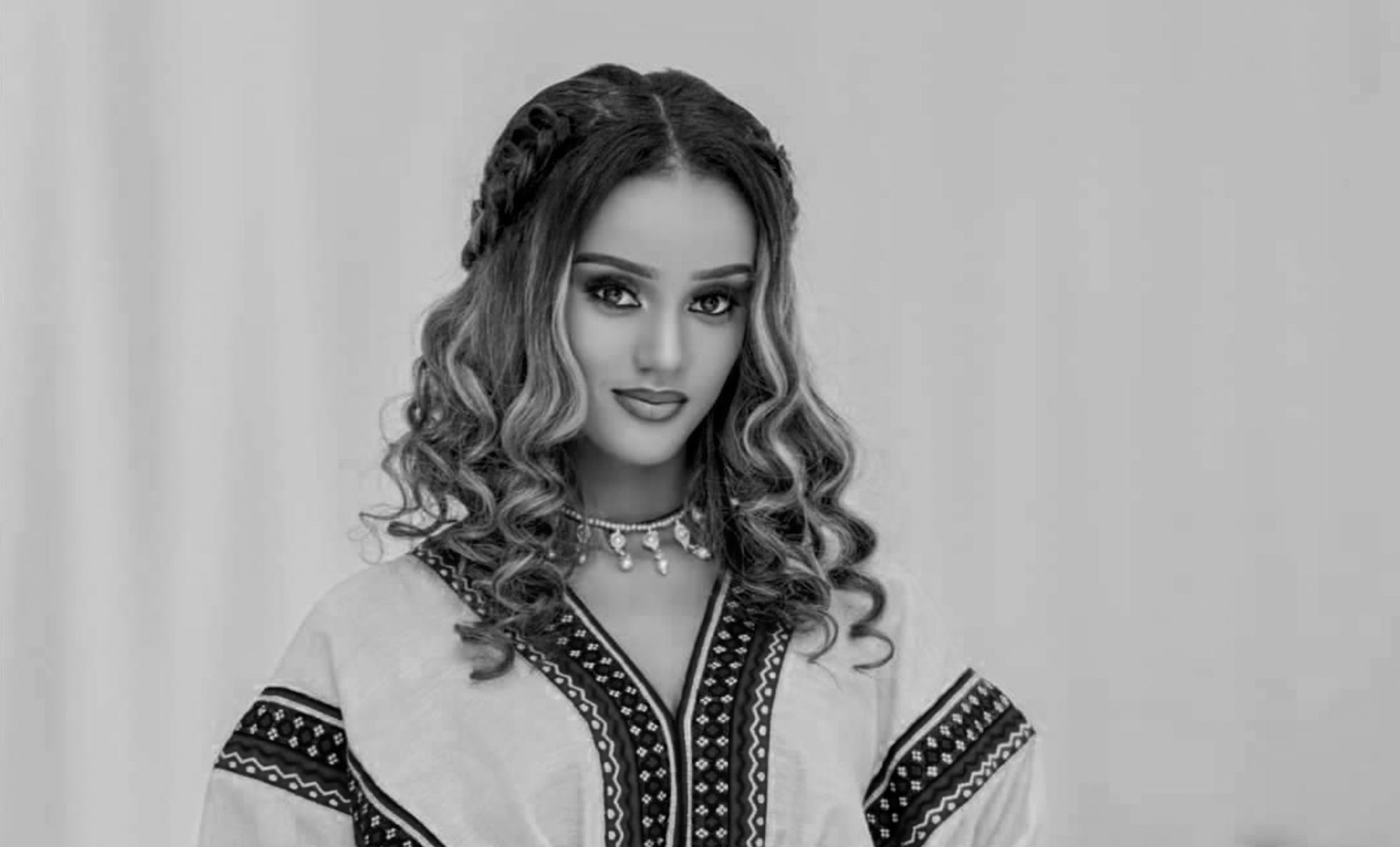
In March 2025, Ethiopia was shaken by the tragic death of Keneni Adugna, a young Oromo woman known for her social media presence and her relationship with Andualem Gosa, a celebrated Oromo musician. The two had lived together for nearly two years when Keneni died under mysterious circumstances—initially reported as a suicide, allegedly by falling from their apartment balcony.
The public was stunned, but official responses were muted. Andualem was taken into custody and held for nearly three months while police investigated the circumstances of her death. Yet the investigation remained opaque, with no findings disclosed. In June, he was quietly released without charges. Then, almost immediately, he was honored with a prestigious music award celebrating Oromo musicians and music—a gesture that, for many, felt like an institutional decision to move on, to celebrate an icon while forgetting the woman whose death remained unexplained. But then, the silence broke. Shortly after the award ceremony, Keneni’s previously dormant TikTok account came back to life. A photograph appeared first—showing her with a severely bruised eye. Then came a video: Keneni herself, quietly documenting what appeared to be a pattern of abuse. The shock was immediate and overwhelming. What had been whispered became undeniable. And what had been a private tragedy became a national moral rupture. Across social media, especially among Ethiopian women, the response was swift and intimate. Videos appeared recreating Keneni’s bruises using makeup—a symbolic protest and a shared cry: “#JusticeForKeneni.” In contrast to the institutions that had failed her, ordinary people refused to let her be forgotten. Andualem’s award was just rescinded (as of the time of this writing). A symbolic reversal, yes. But it came not from within the cultural or political institutions that had once celebrated him—it came from below, forced by the gravity of public mourning and anger.
Justice Deferred, Unity Disrupted
Keneni’s death should have united the Oromo community in grief and moral clarity. Instead, it fractured it. While many mourned her and called for justice, others rushed to defend Andualem, casting doubt on the authenticity of the abuse images or downplaying the seriousness of the case. Oromo social media splintered along familiar lines- tribal, political and even religious. Even in mourning, the Oromo nation was not united. What should have been a moment of collective reflection became instead a moment of ideological tension, where the protection of symbolic figures outweighed the pursuit of truth or justice. The silence of Oromo institutions—cultural, political, and religious—was deafening. The ideology that once promised justice became complicit in its denial. Oromummaa, in this moment, revealed itself as protective of its icons but indifferent to its victims. But this failure did not go unnoticed by the broader Ethiopian public, who stepped in to fill the moral vacuum.
The Promise and Power of Oromummaa
At the heart of modern Oromo identity lies Oromummaa—a term that translates loosely to “Oromoness,” but carries far greater historical, cultural, and political weight. Over the last several decades, Oromummaa has served as a rallying cry for unity among a diverse population. It draws on shared language, heritage, and traditional governance systems like Gadaa, which emphasize democratic participation, accountability, and justice. Oromummaa offered a cultural and ideological framework through which the Oromo people could assert themselves. Through the songs of artists like Hacaalu Hundessa, Oromummaa reached millions and inspired solidarity across generational and regional divides. In the years following Hacaalu’s death, Andualem Gosa emerged as one of its most prominent cultural figures—carrying forward the message of Oromo unity and resilience. Yet it is precisely this symbolism that makes the silence around Keneni’s death so jarring. If Oromummaa is a movement of justice and solidarity, how could it fail one of its own so completely?
The Class Dimension: Keneni and the Ethiopian Majority
Keneni’s vulnerability was not only political—it was structural. Despite earning a degree in a STEM (Science, Technology, Engineering, Mathematics) discipline, she found no employment in her field. Like many young Ethiopians, she turned to informal work—in her case, fashion and social media partnerships. Her relationship with Andualem, who had risen to elite status through music and cultural politics, placed her in a position of economic and social dependency. This imbalance speaks not just to the power dynamics within their relationship, but to a larger class divide within Ethiopian society. Andualem, though once from modest roots, had ascended into the Oromo elite—a class protected by cultural prestige and institutional loyalty. Keneni remained tethered to the everyday struggles of the majority: educated but underemployed, exposed to risk, and without structural support. In this way, Keneni’s story is not just Oromo—it is Ethiopian. Her class position, far more than her ethnic identity, is what resonated with millions. She became a symbol of what happens when structural inequality, gendered violence, and elite protection intersect—not just in Oromia, but across the nation.
Beyond Oromia: Oromummaa in National Perception
Keneni’s death rose above the confines of identity politics. While Oromummaa fractured along internal lines, Ethiopians across ethnic, regional, and religious backgrounds united in collective grief and outrage. A viral wave emerged—led by young women—who posted videos recreating Keneni’s bruises with makeup. It wasn’t a political statement, but an emotional uprising: a shared refusal to let her pain be dismissed or forgotten. The irony is impossible to ignore. While Oromummaa shielded a man who symbolizes its cultural power, ordinary Ethiopians—many of them non-Oromo—rose to protect a woman it had abandoned. This is where the critique of Oromummaa from outsiders gains unexpected resonance. Eritrean President Isayas Afewrki, in a controversial speech earlier this year, warned that Oromummaa had become a dangerous ideology, one that does not serve the interests of the Oromo people. While his motives may be political, Keneni’s case seems to validate his core observation. Oromummaa, at least in its current institutional form, did not protect the vulnerable. It protected itself. It is no coincidence that the rescindment of Andualem’s award came only after pressure from outside Oromia, not from within. In this moment, class and gender—not ethnicity—became the true axis of justice and solidarity. And Oromummaa, once a powerful vision of collective uplift, found itself on the wrong side of history.
Conclusion: Oromummaa Failed Keneni
Keneni’s death does not merely challenge the integrity of Oromummaa—it exposes its true nature. An ideology that claims to unify, empower, and protect has instead revealed itself to be exclusionary, patriarchal, and elite-serving.
That betrayal is especially devastating because Keneni was everything the ideology claims to celebrate: a proud Oromo woman who visibly promoted her culture through traditional fashion, and a university graduate—an educated face of the Qubee Generation. She lived Oromummaa with sincerity and creativity. And yet, when she needed protection and justice, it failed her.
Her death, then, is not just a tragedy. It is an indictment. A warning. And a demand—for new forms of justice and belonging that are not constrained by loyalty to ideology, symbolic identity or elite power. Oromummaa cannot make space for truth, dissent, and dignity—and it does not deserve to endure.